












Farming communities in Mexico can face unstable income, limited resources, environmental pressures, changing weather, and restricted access to productive investment, particularly for farmers managing limited household resources and seasonal uncertainty.
Sembrando Vida combines rural support with agroforestry and community participation. This guide explains eligibility, registration, payments, land requirements, and sustainable farming support. It also covers practical challenges, documentation, and tips for prospective participants.


What Is Sembrando Vida? Overview of the Program
Sembrando Vida is a federal program that supports rural producers through direct payments, agroforestry work, technical assistance, community organization, productive training, and locally adapted farming strategies.
In 2026, the program continues promoting productive inclusion while helping restore rural landscapes and strengthen food security.
The Main Goals
The initiative seeks to improve rural incomes while encouraging sustainable production and recovery of forest cover.
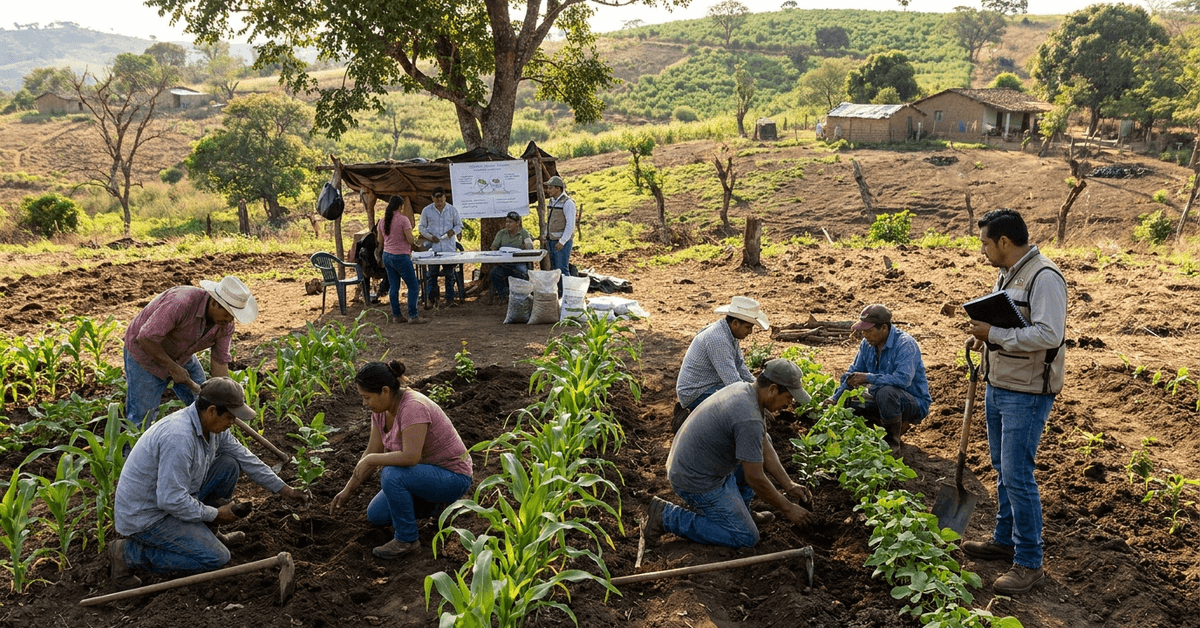
Participants work with agroforestry systems, traditional farming methods, and Milpa Intercalada con Árboles Frutales. These productive systems combine crops, fruit trees, timber species, and local knowledge.
How Funding and Support Work?
For 2026, eligible participants receive an ordinary economic payment of MXN 6,450 each month, paid after the corresponding month.
The program may also provide in-kind support, technical guidance, social accompaniment, and productive inputs according to budget availability. Payments are delivered through authorized financial channels, including Banco del Bienestar arrangements.
Who Can Join Sembrando Vida?
The program targets adult agrarian participants living in rural areas, prioritizing municipalities with social deprivation and communities with Indigenous or Afro-Mexican populations. Applicants must also have 2.5 hectares available for an approved agroforestry production unit.
Application Process
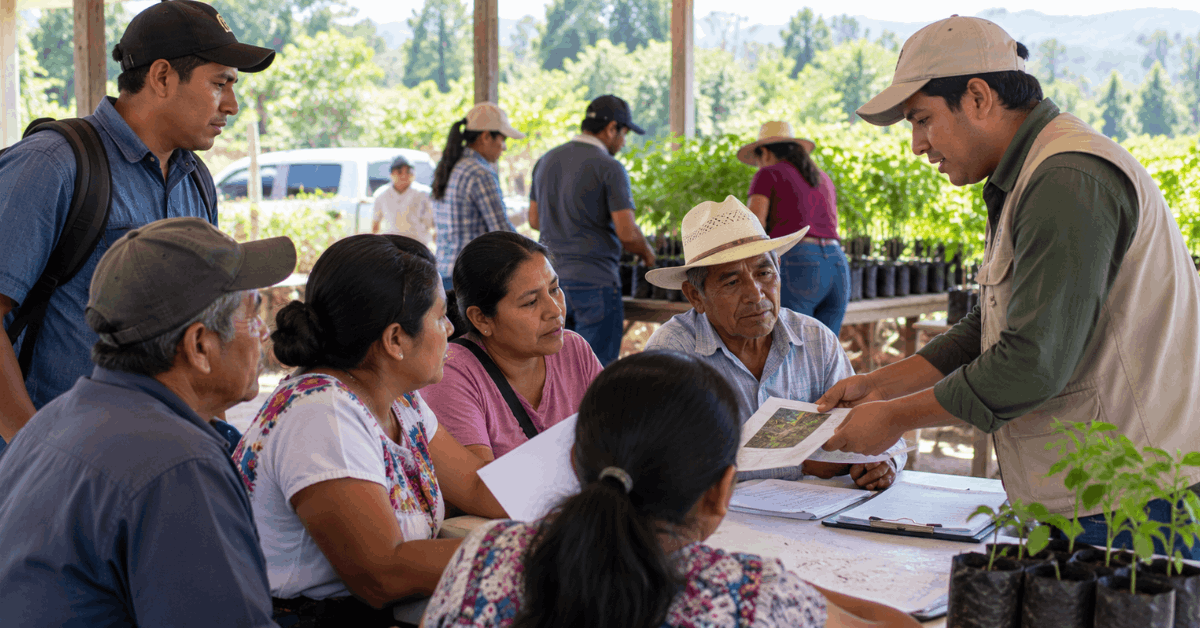
Enrollment begins when the program opens incorporation activities in eligible territories. Prospective participants may need to attend Agrarian Assembly meetings or community information sessions, complete preregistration, and receive a technical field visit. Admission depends on eligibility verification, available spaces, and the annual program target.
Documentation Required
Applicants must provide identity, residence, land, and commitment records required by the current operating rules. Additional documents apply when land is communal, borrowed, or held through another legal arrangement.
- Valid official identification, such as INE, passport, or military service card
- CURP
- Recent proof of address accepted by the program
- Documents that prove land ownership, possession, usufruct, or another qualifying right
- Signed commitment letter accepting program requirements
- Sharecropping, usufruct, or civil contract when needed to complete 2.5 hectares
- Ejidal assembly authorization when communal-use ejido land requires it
Applicants should register locally through authorized Sembrando Vida personnel when incorporation is active. Using official program channels helps prevent fraud and ensures records enter the correct process.
How Sembrando Vida Supports Sustainable Agriculture?
Sembrando Vida emphasizes agroforestry rather than only distributing cash. Its production model combines trees, crops, soil recovery, technical support, and community learning.
Community Learning and Technical Advisors
Participants receive social, technical, and forestry accompaniment connected to their production units.
Specialists can support planting plans, agroecological practices, certification, value-added production, and market development. Progress still depends on local conditions, climate, soil quality, and participant commitment.
Examples of Crops and Trees Promoted
Plant choices vary by region, ecosystem, productive system, and technical recommendations. Common systems can combine food crops and trees suited to local conditions.
- Corn, beans, squash, and other traditional milpa crops
- Coffee or cacao in suitable producing regions
- Fruit trees adapted to local climates
- Timber and native tree species where appropriate
- Other regionally suitable crops included in approved agroforestry plans
Main Benefits of Participating
The program combines monthly financial support with agricultural development, technical accompaniment, productive planning, knowledge exchange, and organized community participation.
Participants can use these combined resources to strengthen production while working toward longer-term rural income opportunities.
Building Rural Communities
Sembrando Vida organizes beneficiaries around community participation and productive cooperation.
Participants can exchange knowledge, coordinate nursery or planting activities, and build local networks. This collective approach supports learning beyond individual plots.
Common Challenges and Realities
Participation requires more than receiving a monthly transfer. Beneficiaries must maintain their production units, comply with program obligations, and work through agricultural risks such as weather, pests, or uneven growing conditions.
Land Disputes and Bureaucracy
The production unit must be free from land-tenure disputes, and applicants need valid proof of ownership or possession.
People using ejidal or communal land may need additional agreements and, in some cases, get community endorsement through the legally required assembly authorization. Clear land documentation can prevent delays.
Long-Term Results
The program aims to improve livelihoods, food self-sufficiency, agroforestry production, and forest recovery over time.
Results can differ by region because weather, markets, technical execution, and local ecology vary. Long-term productive success therefore depends on both program support and sustained field management.
Tips for Prospective Participants
Preparation can make preregistration and verification easier when spaces open in a target area and authorized personnel begin incorporation activities. These practical steps can help applicants avoid preventable problems.
- Check current Sembrando Vida announcements and territorial coverage.
- Confirm that 2.5 hectares are legally available for the production unit.
- Review land records before the technical visit.
- Keep identification, CURP, and proof of address current.
- Ask authorized staff which contracts apply when land is borrowed or shared.
- Make sure communal-land approvals are documented when required.
- Keep copies of every agreement, registration record, and notice.
- Be available for the physical validation visit.
- Avoid clearing natural vegetation merely to enter the program.
- Follow technical recommendations suited to the local ecosystem.
Legal and Tax Considerations for Sembrando Vida Recipients
The monthly support is a federal social-program payment rather than an ordinary employment salary. Participants should follow current fiscal guidance if they have separate commercial income, sales, or other taxable activities connected with their farming operations.
Landownership Issues
Applicants do not always need to own the entire 2.5 hectares personally, but they must have a valid right to use the land under accepted arrangements.
Contracts may need a minimum term and must show that the land is available, conflict-free, and authorized for the production system. The 2026 rules provide specific land-tenure requirements for private, ejidal, communal, and shared arrangements.
Where to Verify Current Program Information?
Applicants should use the official Bienestar page and current operating rules for eligibility, payment, and incorporation details. The program’s official information is more reliable than social-media posts or unofficial intermediaries.
Conclusion
Sembrando Vida combines monthly rural support with agroforestry production, technical assistance, and community participation. In 2026, eligible beneficiaries receive MXN 6,450 monthly and must maintain a qualifying 2.5-hectare production unit.
Accurate land records, official preregistration, and cooperation with technical verification can make the enrollment process smoother. Current Bienestar rules remain the best source for coverage, documentation, payment amounts, and participation requirements.